We make it. We care for it. We follow it over time.
A rug is not a purchase that ends at delivery. Wool is a living fibre: it holds up for decades if it is treated simply, and it recovers from most of what family life does to it. Here is what we actually recommend.
Day to day
Vacuum without the beater bar, in the direction of the pile. Once a week is plenty; a rug in a quiet room needs less. Wool releases dry soil easily, which is precisely why it stays clean longer than synthetic fibre.
Rotate the piece twice a year. Light fades everything eventually, and a rug that turns fades evenly rather than in one bright stripe along the window side.
Expect shedding in the first months. Loose fibres from the spinning work their way out; it stops on its own and it is not a defect.
When something spills
Act immediately and blot — never rub. Rubbing pushes the spill into the knot and breaks the surface of the fibre. Press with a clean white cloth, from the outside of the stain inwards, and keep changing to a dry part of the cloth.
Use cold or lukewarm water only. Hot water sets protein and tannin stains into wool and can shrink the fibre. Avoid every product containing bleach, ammonia, oxygen boosters or enzymes: they strip the natural lanolin and attack plant-based colour.
When a stain resists, stop rather than escalate. Most of the damage we repair in the atelier was caused by a well-meant second attempt with the wrong product.
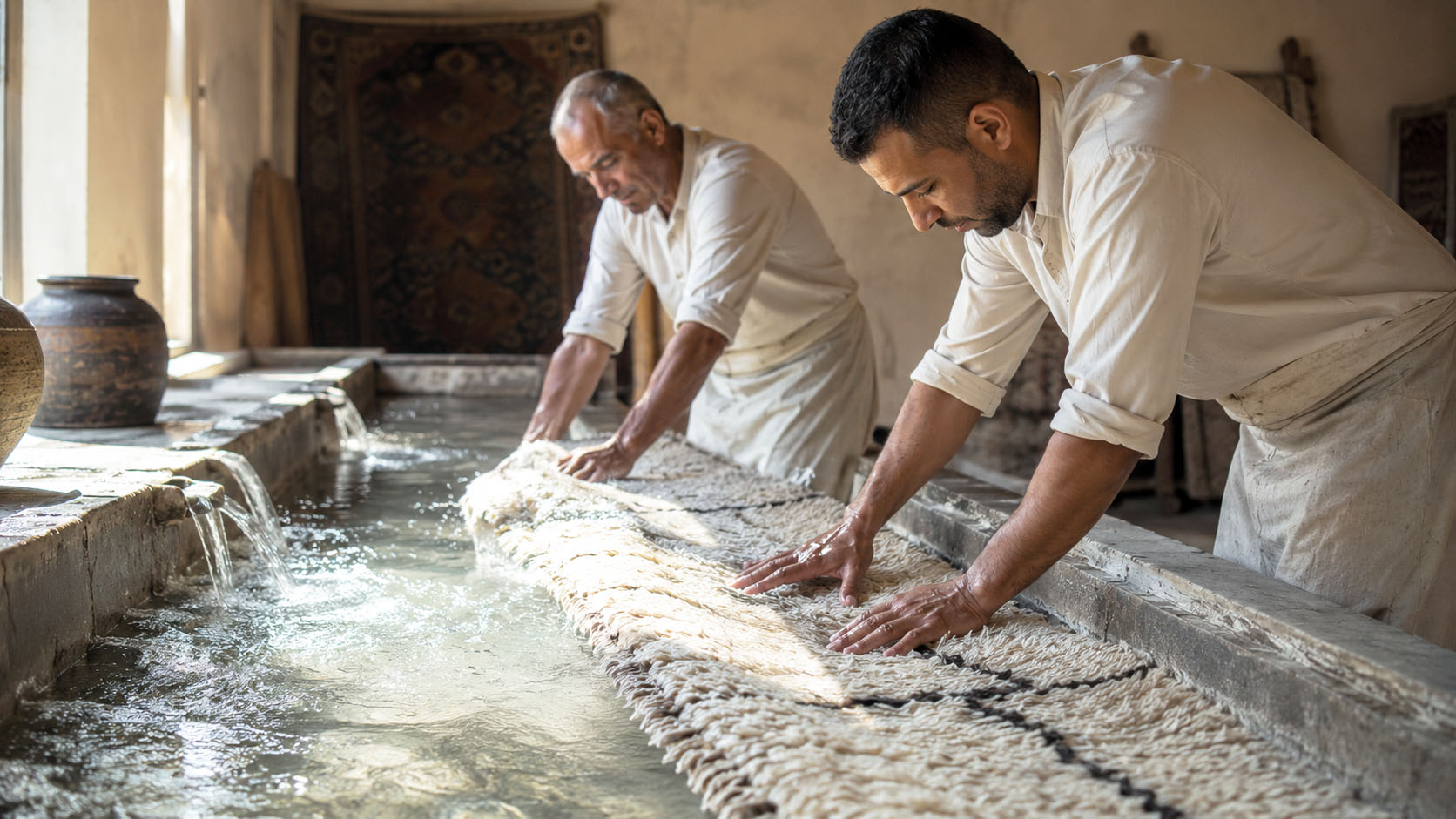
Washing in the atelier
Every Nestaground piece can come back to us to be hand-washed, with methods chosen for natural wool and plant-based dye. We handle the process from collection to return, and we quote any repair before starting the work.
Washing removes most soil and restores suppleness and brightness. It does not remove everything: some stains are permanent, and we will tell you which before you send the piece rather than after. Turnaround is roughly fifteen days from the day the rug reaches us.
Restoration and repair
Fringes, edges, a worn area under a chair, a corner a puppy found interesting: most of it is repairable. Some objects do not leave the home — they become part of it, and a repair is what keeps that possible.
Send a photo of the damage and we will tell you honestly whether it is worth repairing, what it would cost, and how long it would take.
Frequently asked questions
Can I use a steam cleaner on a wool rug?
No. Heat and moisture together felt the wool and can set stains permanently. Hand-washing at controlled temperature is the only method we recommend for a hand-knotted piece.
Is a wool rug suitable for allergy sufferers?
Generally yes. Wool traps dust in the pile rather than letting it circulate, and it does not off-gas the volatile compounds that synthetic fibres and their chemical treatments release. Regular vacuuming and periodic washing are what make the difference.
What if my child is sick on the rug?
Blot immediately with cold water, get the surface as dry as you can, and let air do the rest. Do not use an enzyme cleaner. If a mark or an odour remains, send it to us — this is routine work.
How often should a rug be professionally washed?
Every two to four years for a rug in a living room, more often for a piece in a play area. Wool does not need frequent deep cleaning; over-washing does more harm than under-washing.
A question about a piece you already own?
Send a photo. We answer personally, whether or not the rug came from us.
Get in touch