
The children's rug belongs in the living room
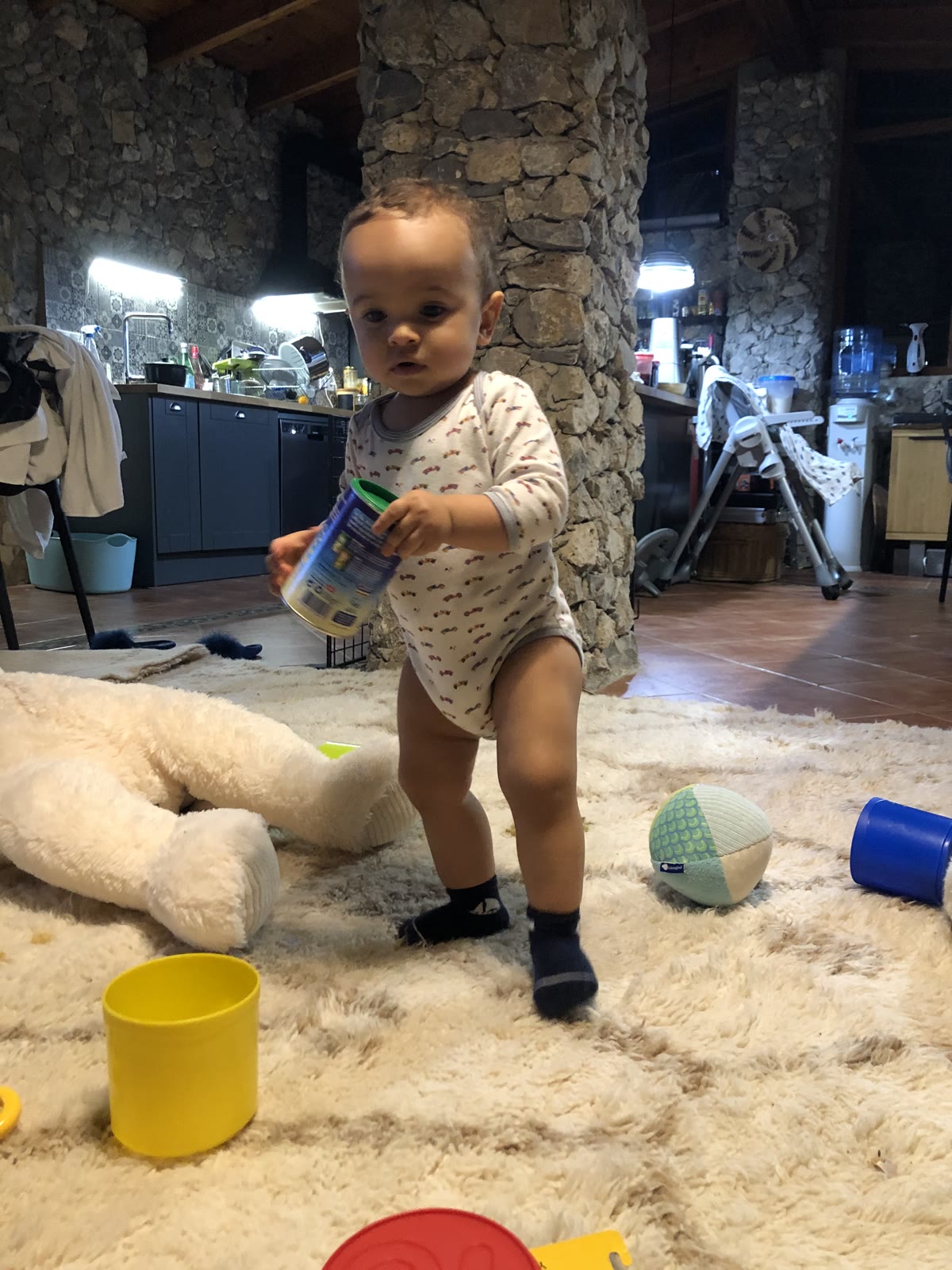
There is a gap between the idea of the children's rug and where children actually spend their time. Walk through any home where a child lives, and you will find the same thing: toys in the hallway, a book on the sofa, a blanket pulled from the living room onto the floor. Children are not in their rooms. They are near you.
This is not a criticism of the children's room. It is simply an observation about how families live. And it changes entirely how we should think about the rug.
Where children actually play
For most of a child's waking hours — especially in the first years — they are in the main rooms of the house. Crawling near the kitchen while a parent cooks. Sitting on the living room floor while conversation happens around them. Playing at the foot of the sofa. Falling asleep in the middle of wherever the household is gathered.
The living room is the first shared floor. It is the floor that receives the child's weight, the child's falls, the child's first explorations. It is where the family is. And so, unsurprisingly, it is where the child is.
A rug in the children's room is beautiful — but mostly decorative
A rug placed in a child's room is a considered, beautiful choice. It gives the room warmth, anchors the space, creates a surface that is specific and calm. We are not arguing against it.
But its functional use will be limited. The child will play in that room — mornings, evenings, quiet moments alone. Yet the majority of daily life unfolds elsewhere. The rug in the children's room receives a few hours. The rug in the living room receives the whole day.
"A rug that works only in a nursery is, in the end, a temporary object. A rug that belongs to the living room belongs to the family."
The room that holds everything
The living room is also the most demanding space in the house. It is visible from the entrance, used by every member of the household, and seen by guests. Whatever is placed there has to function on every level: as a children's space, as an adult space, as a piece of the interior.
This is where most "children's rugs" fall short. They are designed with a child's aesthetic in mind — bright primaries, playful patterns, nursery logic — but not with the whole home in mind. They work for a few years, then they feel out of place. They are replaced. The floor moves on.
What a real children's rug does in the living room
A rug truly designed for a child — pure natural wool, plant-based dyes, no synthetic treatments, no PFAS, no off-gassing — is first and foremost a health choice. And health choices matter most where the child spends the most time. That is the living room.
At Nestaground, our pieces are made from materials selected precisely for child proximity: organic fibres, vegetable dyes, no chemical finishes. But they are also designed in proportions, colours and textures that belong in a considered adult interior. Not nursery objects. Not temporary solutions.
A piece that a parent chooses because it is safe, and keeps because it is beautiful. A piece that moves from the living room to another room as the child grows — and stays in the family long after the child has left the floor.
A thought on choosing
When choosing a rug with children in mind, the most useful question is not: will this work in the children's room? It is: will this work in the room where we actually live?
The children's room can have its own rug — beautiful, scaled to the space, thoughtfully chosen. But the rug that matters, the one that earns its place day after day, is the one beneath the coffee table. The one your child sits on while you read. The one that catches the fall, absorbs the moment, and is still there when your child has grown.
Read more
→ How to choose a rug for a child's room → The first floor: why what your child sits on matters → Are rugs safe for babies?Nestaground pieces are designed for child safety and adult interiors. Natural wool, plant dyes, made for the room you actually live in.
Discover the collection